
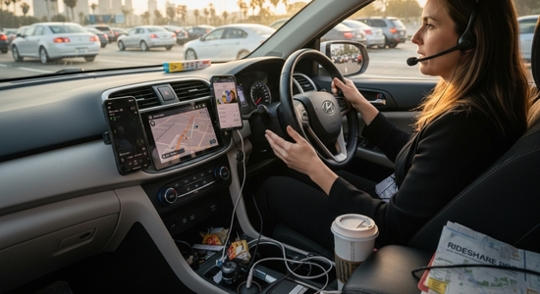
The alarm goes off before sunrise in Bakersfield, and the day begins long before you even reach the job site. You pour coffee into a thermos, grab the keys, and start driving to work, hoping traffic behaves. Whether your route takes you over the Bay Bridge into San Francisco, along the 405 in Los Angeles where vehicle accidents happen daily, or across quiet agricultural roads in the Central Valley, driving for work is simply part of the job for many Californians.
But when a car accident interrupts that routine, or worse, when you’ve been injured in a car accident while on the clock, things can get complicated quickly. Maybe you’re sore, confused about next steps, worried about whether your personal vehicle is totaled, or frustrated because insurance companies are already asking questions. If you were involved in an accident doing your job, this guide walks you through your legal options, how California driving-for-work injury claims work, and how the compensation system supports injured workers across the state.
When a routine work trip turns into an injury
Most workers never plan for a car crash during a workday. You expect to finish your route, complete deliveries, or make that sales appointment, not end up filing a workers’ compensation claim after an unexpected impact. Yet accidents involving work vehicles and even accidents involving company vehicles happen daily across the state.
Workers may face a work-related crash under many circumstances, including:
Driving between job sites for your employer.
- Running errands because your employer requires it.
- Using a company vehicle or even when the employer asks an employee to use their personal transportation for tasks.
- Traveling to required training, a meeting, or a vendor appointment.
- Driving a company car, van, or your personal auto during work hours.
- Tasks where employees use their personal vehicle for work or personal vehicle for work errands.
And yes, being injured in a work-related car event can qualify you for financial compensation even when a crash looks like a basic accident in California or an everyday accident while driving.
Accidents also happen when workers use their personal cars or when the employer may assign a trip that’s only partly job-related. These details matter when determining whether you may be eligible for workers’ compensation benefits.
How California driving-for-work injury claims fit into workers’ compensation
When the accident occurs during job duties, California driving-for-work injury claims generally applies, even if fault for the accident is unclear. Under California workers’ compensation laws, if an employee is injured in a car accident while performing job tasks, they are typically covered by workers’ compensation regardless of whether they made a mistake, another driver caused the crash, or the weather turned dangerous.
Under this workers’ compensation system, employees injured during work-related accidents may receive:
- Medical treatment under workers’ compensation insurance
- Temporary disability payments
- Permanent disability benefits
- Job displacement assistance
- Mileage reimbursement for medical visits
- Coverage for diagnostic testing
- Access to authorized specialists
These workers’ compensation benefits are separate from what you might pursue in a personal injury claim, a personal injury lawsuit, or a third-party claim if another driver’s negligence contributed to the crash. In fact, many workers may be eligible for both types of recovery, including additional compensation beyond workers’ comp.
Because California has strict rules on when you can file a personal injury lawsuit, you should consult with an attorney or a qualified injury attorney who handles both workers’ compensation and auto-related personal injury cases.
Who counts as driving for work in California
You don’t need to be a commercial driver to qualify. California employee vehicle accident claims can include nearly any task where the employer directs or benefits from the trip.
This may include:
- Driving between customer locations
- Dropping off equipment or documents
- Making deliveries
- Transporting coworkers
- Driving a company car or personal auto for official tasks
- Completing trips where the employer requires attendance
However, the going and coming rule generally excludes the normal commute or commute to and from work. But even the “going and coming” exception has exceptions of its own, especially when the employer requires the trip, when an employee is using a company vehicle, or when accidents involve personal vehicles for work tasks.
In short: If you were hurt during what looks like a work-related car accident, you may still qualify for workers’ compensation even when the situation appears gray.
Common work driving accidents and injuries
Because work trips happen in high-traffic areas, a work-related car accident in California can take many forms, including:
- Rear-end collisions
- Intersection crashes
- Delivery-route car accidents
- Accident while driving in congested zones
- Car accident at work while loading or unloading
- Car accident while driving to multiple job sites
Injuries may range from mild strains to surgical conditions. Injury victims often experience:
- Neck and back injuries
- Shoulder and knee trauma
- Concussions
- Strains and sprains
- Long-term mobility limitations
When employees injured on the road need ongoing care, the path to recovery may involve both workers’ comp and separate personal injury recovery.
What compensation injured workers may receive
Workers often want to know what compensation benefits they can get after a crash. Under workers’ compensation coverage, you may receive workers’ compensation benefits such as medical treatment, wage replacement, and disability payments.
At the same time, you may also seek compensation through a third-party claim if another driver caused the collision. This can help recover financial compensation related to pain, suffering, property damage, or long-term losses.
And when an employer is responsible through employer negligence, an employee may even sue your employer, though this is extremely limited under California law requires workers’ comp as the primary remedy.
A strong claim may allow you to pursue compensation from all available sources, increasing your chances of receiving the maximum compensation allowed under the law.
How workers’ comp and auto insurance fit together
When crashes involve company vehicles, personal vehicles, or accidents involving company vehicles, your case may involve:
- Workers’ compensation
- Auto insurance
- Liability disputes
- Personal injury law
- Third-party auto claims
- Employer obligations
- Traveling employee exceptions
An experienced injury lawyer or personal injury attorney can help evaluate every type of claim you may have and guide you so that neither claim undermines the other.
Understanding the circumstances of your accident is critical, especially when deciding whether to file a claim, file a personal injury, or file a personal injury lawsuit.
Your rights after a driving injury at work
If you’ve been injured, you have rights. Report the crash to your employer as soon as possible, request a claim form, and follow medical instructions. Whether you were injured in a work-related car event near San Jose or caught in a car accident in California while making a delivery, your rights remain the same.
You're also entitled to representation. A California workers’ compensation attorney or work injury attorney LA can help protect those rights while you pursue workers’ compensation benefits and explore potential legal claims.
Simple steps you can take this week
Document everything.
Write down:
- Where the accident occurred
- What you were doing
- Who witnessed it
- Why the trip was work-related
Keep all paperwork. Save messages with supervisors, letters from insurance companies, photos of damage, and medical reports.
If you were injured in a work-related car event, these early records can help you pursue workers’ compensation benefits.
Retaliation after a driving-for-work injury
Retaliation is unlawful. If an employer directly reduces shifts, disciplines you, or pressures you after a crash, write everything down. These actions may relate to the crash or confusion around workers’ compensation coverage, but they should never interfere with your right to workers’ compensation or a personal injury claim.
How a lawyer can help with California driving-for-work injury claims
A seasoned attorney can clarify how workers’ comp, auto insurance, or a personal injury claim may apply. They can also explain when the employer may be liable for accidents, especially in cases involving driving a company vehicle or when the employer requires employee to use their personal vehicle.
Speaking with an attorney today can help ensure you get the compensation they deserve.
Statewide access to The Work Justice Firm
Whether you were injured in a car accident in Los Angeles or experienced a work-related car accident in a small town, The Work Justice Firm offers statewide support for California driving-for-work injury claims. Meetings can occur by phone, video, or in person near Grand Park with easy access to parking and public transit.
Ready to talk about your work driving injury
If a work-related car accident disrupted your shift, don’t navigate the workers’ compensation system alone. A lawyer can guide you through California driving-for-work injury claims and help determine whether you’re eligible for workers’ compensation, a personal injury lawsuit, or a third-party claim.
You can call during business hours, request a flexible appointment, or reach out online for guidance and support that fits your day.