
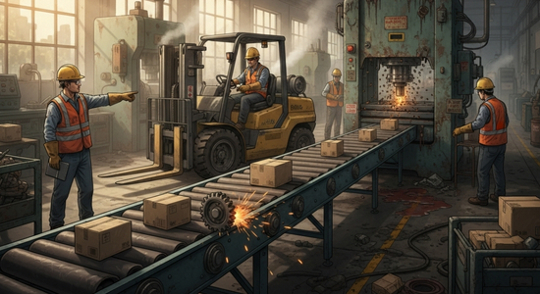
You usually hear the warning first. A conveyor that starts to chatter. A press that hesitates before it cycles. A forklift that feels rough over a spot it used to glide across. In a busy California workplace, those little signals get ignored fast because everyone is trying to get through the shift.
But those signals matter. They can be the difference between a close call and a serious injury.
This page is for workers across California who deal with machinery and equipment every day, including warehouses near the Ports of Los Angeles and Long Beach, manufacturing in the Inland Empire, construction corridors along the 405 and 101, and job sites throughout the Central Valley. It explains what tends to go wrong, how failures build over time, and what steps can protect your health and your claim after an incident.
The Major Causes of Machine and Equipment Failure You Should Know
Most breakdowns are not random. They usually come from a handful of categories that show up in different industries, with different machines, but the same patterns.
Here are the main categories that cover most equipment failures:
- Maintenance problems, including skipped service, poor lubrication, and missed inspections
- Operator and training problems, including rushed onboarding and unclear operating procedures
- Part, installation, and repair problems, including incorrect components and sloppy assembly
- Monitoring problems, including failure to catch vibration, heat, or wear early
- Electrical problems, including wiring issues, faulty controls, and unsafe power conditions
- Environmental and workload stress, including dust, moisture, corrosion, and overloading
- Aging equipment, including outdated components and worn moving parts
When you see it this way, it is easier to connect the dots regarding the causes of machine failure. A machine does not “just fail.” A failure occurs after warnings get missed, or after risk becomes normal.
The Primary Causes Contributing To Most Equipment Breakdowns
If you had to boil it down to what drives the most unplanned downtime, it usually comes back to a few repeat issues.
- Preventive maintenance gets treated like optional - Regular maintenance is boring, and it costs time, so it gets pushed off. That can lead to wear and tear turning into a breakdown that stops the line, causes costly downtime, and increases repair costs.
- The equipment is run past its limits - Overloading, speed adjustments, and constant stop-start cycles all raise stress on critical equipment. Even a strong machine has a point where reliability drops, especially if maintenance strategies are not followed.
- Early warning signs are ignored - Vibration, heat, strange noise, and leaks are not “normal.” They are often the first clue that a root cause is building.
- Repairs get rushed - A temporary fix may get the machine running, but it can also set up a bigger failure later. The equipment history and maintenance strategies matter here. Repeat breakdowns often mean the underlying cause was never handled.
- Training is light, or training is inconsistent - When people are not taught safe operating procedures, lockout tagout steps, or shutdown rules, they fill gaps with guesses. That is when a malfunction turns into an injury.
This is why the major causes of machine and equipment failure often look like “small” choices that stack up over weeks or months.
Operator Errors and How They Lead to Machine Failure
People hear “operator error” and think it means someone did something reckless. That is not always the truth. Operator mistakes often come from weak systems, pressure, and unclear standard operating procedures, emphasizing the need for operator training.
Common operator-related factors include:
- Skipping lockout tagout because production is behind
- Clearing a jam without a full shutdown
- Using the wrong tool for an adjustment
- Bypassing a guard or sensor because it slows the task
- Not knowing the emergency stop locations
- Running equipment without proper warm-up or checks
If you are an equipment operator, you already know the reality. The pace is set by someone else. The equipment condition is not always under your control. And when the machine starts acting up, it is easy to get told, “Just make it work.”
If you raised safety concerns and got punished for it, that is where employment law can come into play. Retaliation and pressure after reporting safety issues is a real problem in many workplaces.
Preventive Maintenance Problems, Too Little, Or Too Much?
Most people understand how a lack of preventive maintenance causes equipment failure. Parts wear down. Lubrication breaks down. Filters clog. Components heat up. The maintenance schedule slips, then the breakdown hits at the worst time.
What people talk about less is how excessive or sloppy maintenance can also create problems. It sounds odd, but it happens.
Examples:
- Over-lubrication that attracts debris and accelerates wear
- Incorrect lubrication type that breaks down under heat
- Overtightened fasteners that crack housings or damage bearings
- Misalignment during maintenance tasks that leads to vibration and early failure
- Skipping calibration steps after service
Good maintenance management is not only about doing more. It is about doing the right maintenance activities, in the right way, on the right timing. That is what protects asset health and supports equipment reliability.
Aging Equipment and Why it Fails More Often
Aging equipment does not always look old. Sometimes it is clean, repainted, and still running daily, but that doesn’t prevent the causes of machine failure from manifesting. Older equipment can become prone to failure because internal components are worn, outdated, or no longer supported.
Aging equipment often leads to:
- Increased vibration from worn bearings and shafts
- More frequent leaks from seals that have hardened
- Electrical issues from older wiring and controls
- Safety problems when guards or sensors are outdated or missing
- Longer downtime because parts are harder to source
In a lot of workplaces, older equipment stays in service because replacing it costs money, despite the need for proactive maintenance. That business choice can shift risk onto workers. And when an injury happens, the paper trail around equipment maintenance, repair history, and reported issues can matter a lot.
Insufficient Monitoring and Why Failures Get Missed
Some failures can be prevented with simple monitoring. That can mean listening for abnormal sound, watching for heat, and checking for leaks. It can also mean more formal condition-based maintenance, like vibration tracking or thermal checks.
When monitoring falls short, problems stay hidden until the equipment fails under load.
Examples of monitoring gaps:
- No routine checks of vibration or heat on rotating equipment
- No tracking of recurring faults or repeated shutdowns
- No review of equipment history after repeat repairs
- No clear process to tag and remove equipment from service when it is unsafe
Some companies use a computerized maintenance management system to track tasks and parts. Some do it with paper logs. The tool matters less than the habit. If no one is paying attention to patterns, breakdowns keep happening.
Environmental Factors That Wear Down Equipment Condition
California has every kind of work environment. Coastal air near the ports. Dust and grit around construction and demolition. Heat in the Central Valley. Moisture in washdown areas. Cold mornings on docks. These conditions can shorten the life of machinery fast.
Environmental stress can include:
- Dust buildup that clogs vents and overheats motors
- Moisture that corrodes wiring, sensors, and connectors
- Corrosion on frames, bolts, and moving parts
- Temperature swings that affect tolerances and lubrication
- Chemical exposure that breaks down seals and hoses
These are common causes of equipment failure because they quietly change equipment condition over time. And workers often see the signs first. Rust. Condensation inside panels. Fans clogged with dust. Controls that “act up” on hot afternoons.
Improper Installation and Assembly Problems
Installation issues can lead to equipment breakdown, even when everything else is done right. A machine that is not installed level, not aligned, or not anchored correctly can develop vibration and wear early. So can equipment that is assembled with the wrong torque, wrong parts, or missing components, which are all common causes of machine failure.
Examples:
- Misaligned couplings that create constant vibration
- Incorrect belts or chains that slip or snap
- Loose anchors that allow the machine to shift under load
- Guards installed incorrectly, or not installed at all
- Safety sensors set up wrong, so the machine cycles at unsafe moments
This is one of the machine and equipment failure causes that can be hard for a worker to control, especially if the setup was handled by outside contractors, or done fast to meet a deadline.
Electrical Equipment Failure and Why it Can Be So Dangerous
Electrical failures can cause sudden stops, unexpected starts, and loss of control. They can also create shock, burns, and fire hazards. In industrial settings, electrical and mechanical problems often overlap.
Common causes of electrical equipment failure include:
- Damaged wiring, worn insulation, and loose connections
- Faulty relays, contactors, or control boards
- Moisture inside panels, especially in older facilities
- Improper grounding or makeshift power setups
- Overloaded circuits and repeated breaker trips
- Bypassed safety interlocks
If you notice flickering, odd resets, or “reset it and go” routines, take it seriously. Electrical problems are often part of the major causes of machine and equipment failure, and they can turn a routine task into a serious injury with no warning.
What to Do If You Notice a Problem Before Someone Gets Hurt
If you notice potential issues, you do not need to make it dramatic. You do need to protect yourself.
Steps that can help:
- Report the issue in writing, even a short message
- Note the date, time, equipment name or number, and what you observed
- Ask for the equipment to be taken out of service until a technician checks it
- Follow operating procedures, especially shutdown and lockout steps
- Do not remove guards or defeat sensors to “get through it”
If you can do so safely and lawfully, a photo can help document equipment conditions. If you are told to run unsafe equipment anyway, write down who told you and what they said. Keep a copy somewhere you control.
After an Injury, How to Protect Your Claim in California?
Right after a machine injury, your brain is often focused on one thing, getting through the next hour. That is normal. But the steps you take early can protect your health and your benefits.
A short checklist:
- Get medical care right away, even if it feels “not that bad”
- Report the injury to your employer as soon as you can
- Describe the event clearly, including what the machine did and what failed
- Ask for a copy of any incident report
- Save photos of the machine, the area, and visible injuries
- Keep notes about symptoms that show up later
This is also where work pressure can get messy. Some workers get told to use personal insurance, or to say it happened off the clock, or to come back the next day like nothing happened. If that is happening, it can signal deeper problems in the workplace.
In many cases, the major causes of machine and equipment failure sit next to employment law issues, like retaliation for reporting, unsafe work demands, or discipline tied to an injury report.
Local Details That Make it Easier to Meet With a Lawyer
California workers commute long distances. You might live in one county and work in another. Planning matters, especially if you are injured.
Landmarks and work corridors workers often mention
- Downtown Los Angeles, Koreatown, Hollywood, and the Westside near the 10 and 405
- Industrial areas near the Ports of Los Angeles and Long Beach
- Inland Empire warehouse zones around Ontario, Fontana, and along the 60 and 15
- Bay Area routes near I-880, Oakland, and San Jose industrial areas
- Central Valley hubs near Bakersfield and Fresno distribution routes
Transit options
- Los Angeles County: Metro Rail and Metro Bus can reduce driving stress
- Bay Area: BART and Caltrain are common choices for appointments
- San Diego: the Trolley can be helpful for trips into Downtown and nearby corridors
Parking and timing
- Street meters and paid lots are common around dense business areas
- Plan extra time so you are not rushing from a far lot
- Midday appointments can be easier if traffic and mobility are concerns
Talk with The Work Justice Firm About What Happened
If you sustained an injury from equipment or machinery failure in the workplace due to the negligence of another party, you may be eligible for compensation. When you are suffering from an injury, you will want a legal team that can offer you sound guidance and ensure that you file a claim that is strong and solid.
At The Work Justice Firm, our lawyers can help you get the justice you deserve. Contact us for a free case consultation! Or visit us at workjustice.com to learn more about what we can do for you.