
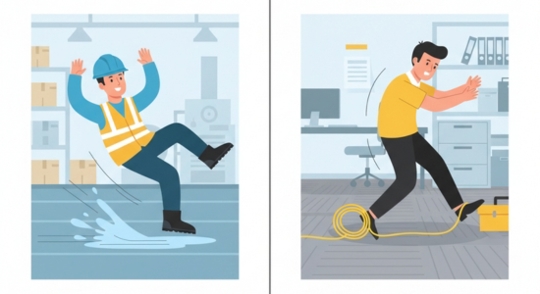
You are walking into work in California and you are thinking about the shift, not the floor. Maybe you are stepping off the Metro in Downtown Los Angeles. Maybe you are heading into a warehouse near the Port of Long Beach. Then your foot slides on a wet patch, or your toe catches on a curled mat, and you hit the ground.
In a fall case, the details matter early. The differences between slip and fall and trip and fall injuries can shape what proof you need, how liability is argued, and whether a third party may share responsibility in a personal injury case.
Differences Between Slip And Fall And Trip And Fall Accidents In California
A slip is usually about traction. Your shoe loses grip and your body keeps moving. A trip is usually about clearance. Your foot hits something and your body keeps moving.
That one difference can change the story in practical ways.
Slip and fall accidents tend to involve:
- Wet floors from a spill or cleaning
- Grease or oil near kitchens, machine areas, or loading bays
- Smooth surfaces that get slick when damp
- Outdoor walkways where water pools
Trip and fall accidents tend to involve:
- Raised mats, torn carpet, or uneven flooring
- Cords, hoses, or straps across a walkway
- Cluttered aisles in stockrooms and back-of-house areas
- Poor lighting that hides changes in floor level
Common Causes Of Slip And Fall Accidents At Work
If you want a clean way to think about slip causes, ask, “What made the surface lose grip?”
Common causes include:
- Spills that were not cleaned fast, including drinks, soaps, oils, and coolants
- Leaks from ceilings, pipes, or refrigeration units
- Freshly mopped floors without warning signs or proper drying time
- Entryways during rain when mats are missing or soaked through
- Loading docks with slick ramps or residue that builds up over time
Small detail that matters: how long the slippery condition existed. A sudden spill is different from a leak that has been dripping for weeks.
Common Causes Of Trip And Fall Accidents At Work
For trips, the key question is, “What did my foot hit?”
Common causes include:
- Buckled mats, raised thresholds, and loose floor transitions
- Broken concrete and uneven pavement in lots and walkways
- Pallets, boxes, and carts left in traffic lanes
- Cables and extension cords not secured or taped down
- Poor lighting in stairwells, storage rooms, and early morning entry routes
Trips can also come from “temporary” hazards that stop being temporary. A cord run for one task that stays out all shift. A pallet parked at an angle that clips the walkway.
Common Slip And Fall Injuries Versus Trip And Fall Injuries
Falls often look similar after the fact, but the direction of the fall can affect what gets hurt.
Slip falls often throw a person backward. Trip falls often pitch a person forward. Either one can still cause severe injuries.
Common slip and fall injuries often include:
- Tailbone and hip injuries
- Low back strains, disc injuries, and sciatica-type symptoms
- Shoulder injuries from bracing
- Head injuries, including concussions
Trip and fall injuries often include:
- Knee injuries, including meniscus tears
- Wrist fractures or sprains from trying to catch the fall
- Facial and dental injuries
- Ankle and foot sprains from the “catch” step
If you hit your head, felt dizzy, or had a headache later that day, treat that as a real problem. Get checked.
How Premises Liability Can Differ In Slip And Fall Vs Trip And Fall Cases
Workers’ comp often covers falls that happen at work, even when no one “did anything wrong.” But liability becomes a bigger issue when you are also looking at a third party claim, meaning someone other than your employer may be responsible.
This is where the differences between slip and fall and trip and fall injuries matter again.
In slip cases, the fight is often about:
- What made the surface slippery
- Whether someone knew, or should have known, it was dangerous
- Whether warnings, mats, or clean-up should have happened sooner
In trip cases, the fight is often about:
- What obstacle or defect caused the trip
- How long it existed
- Whether it should have been repaired, removed, or clearly marked
A third party might be involved if the hazard was controlled by:
- A property owner or manager in a shared building
- A maintenance vendor responsible for cleaning or repairs
- A contractor or delivery company that created a walkway hazard
California premises liability claims often turn on whether the person or entity in control knew, or reasonably should have known, about the dangerous condition and failed to fix it or warn about it.
How To Prove Negligence After A Slip Or Trip Accident
People wait, pain grows, and the scene changes. That makes proof harder. If you can, collect details early after the accident occurred.
Helpful proof often includes:
- Photos of the hazard from several angles
- A wide photo that shows there was no warning sign or barrier
- Names of anyone who saw the hazard before the fall
- An incident report, plus the name of the person who took it
- Security video, requested quickly so it is not overwritten
- Medical notes that match the way you fell
One small thing that helps a lot is writing down your own timeline while it is fresh. Time, location, lighting, footwear, and what you were doing right before the fall accident occurs are all important factors.
What To Do After A Slip Or Trip At Work In California
If you are hurt, your first job is to protect your health. Your second job is to document the event.
A practical checklist:
- Report the fall to a supervisor the same day, even if symptoms feel “not that bad.”
- Ask for a workers’ comp claim form. In many situations, employers must provide a DWC-1 claim form within one working day after learning about the injury.
- Get medical care. Tell the provider how you fell, and what hit first.
- Take photos of the hazard and the surrounding area.
- Keep your shoes and any torn clothing. Do not throw them out.
- Track symptoms for two weeks to provide documentation for your injury attorney. Headaches, numbness, sleep problems, and neck pain matter.
If you missed reporting right away, that can create issues. California workers’ comp rules include a 30-day notice requirement in many cases.
Statute Of Limitations For Slip And Fall Or Trip And Fall Lawsuits In California
Deadlines depend on the type of claim. For many California personal injury lawsuits, the time limit is generally two years from the date of injury underCode of Civil Procedure section 335.1, which your injury lawyer can help you navigate.
If the claim involves a government entity, deadlines can be much shorter, and the steps are different. Do not wait around if a fall happened on government property or a public facility.
Workers’ comp also has its own notice and filing timelines. If you are dealing with a work injury, it is worth getting guidance from a personal injury lawyer early so you do not lose benefits due to timing.
Preventing Slips And Trip Accidents On The Job
Employers and property controllers can often prevent these hazards with basic routines. Workers can also protect themselves, even if the workplace is not perfect.
Workplace prevention basics:
- Clean spills fast, and use clear warning signs while floors dry
- Use non-slip mats in entryways and high-spill areas
- Fix uneven flooring, torn carpet, and raised transitions
- Keep cords out of walkways, or tape and cover them
- Improve lighting in stockrooms, stairwells, and exterior paths
- Keep aisles clear, especially in back rooms and loading zones
If you keep noticing the same hazard, report it in writing to help your injury lawyer build a case. That creates a record.
Talk With The Work Justice Firm About Your Fall Case
If you are trying to sort out the differences between slip and fall and trip and fall injuries, you are probably also dealing with neck injuries, pain, missed work, and pressure to “move on.”
You do not have to guess your way through it. The Work Justice Firm represents workers across California in workplace injury matters and employment law disputes.
Contact us today and schedule a free case consultation! Or visit us at workjustice.com to find out more about what our personal injury attorneys can do for you.